Evapotranspiration: how much water does the garden need?
Evapotranspiration deals with water losses in the topsoil layer. The word consists of evaporation (water evaporation from the soil) and transpiration (water release by plants). These processes, together with infiltration, determine how quickly water is lost from the root zone.
There are several models for calculating evapotranspiration that provide a good approximation of actual water demand for practical purposes. The most important is the Penman-Monteith model, which has become the standard for agriculture and water management. In practice, there are several variations and simplifications of it.
Potential and actual evapotranspiration
Potential evapotranspiration is the maximum amount of water that could evaporate if water were unlimited.
Actual evapotranspiration takes soil moisture and thus the available amount of water into account. Since both plant transpiration and surface evaporation decrease with lower soil moisture, actual evapotranspiration is usually significantly below potential evapotranspiration.
How MIYO calculates evapotranspiration
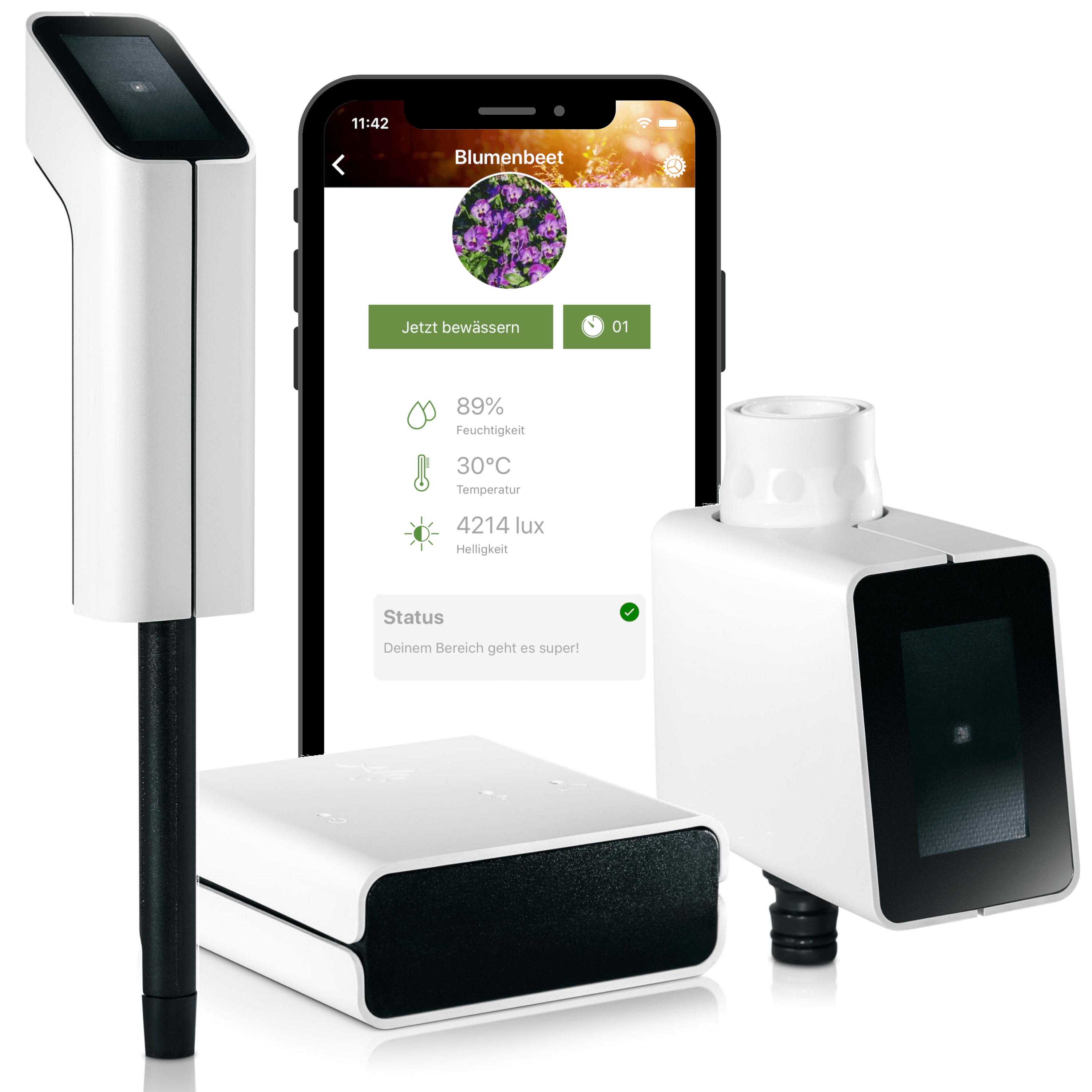
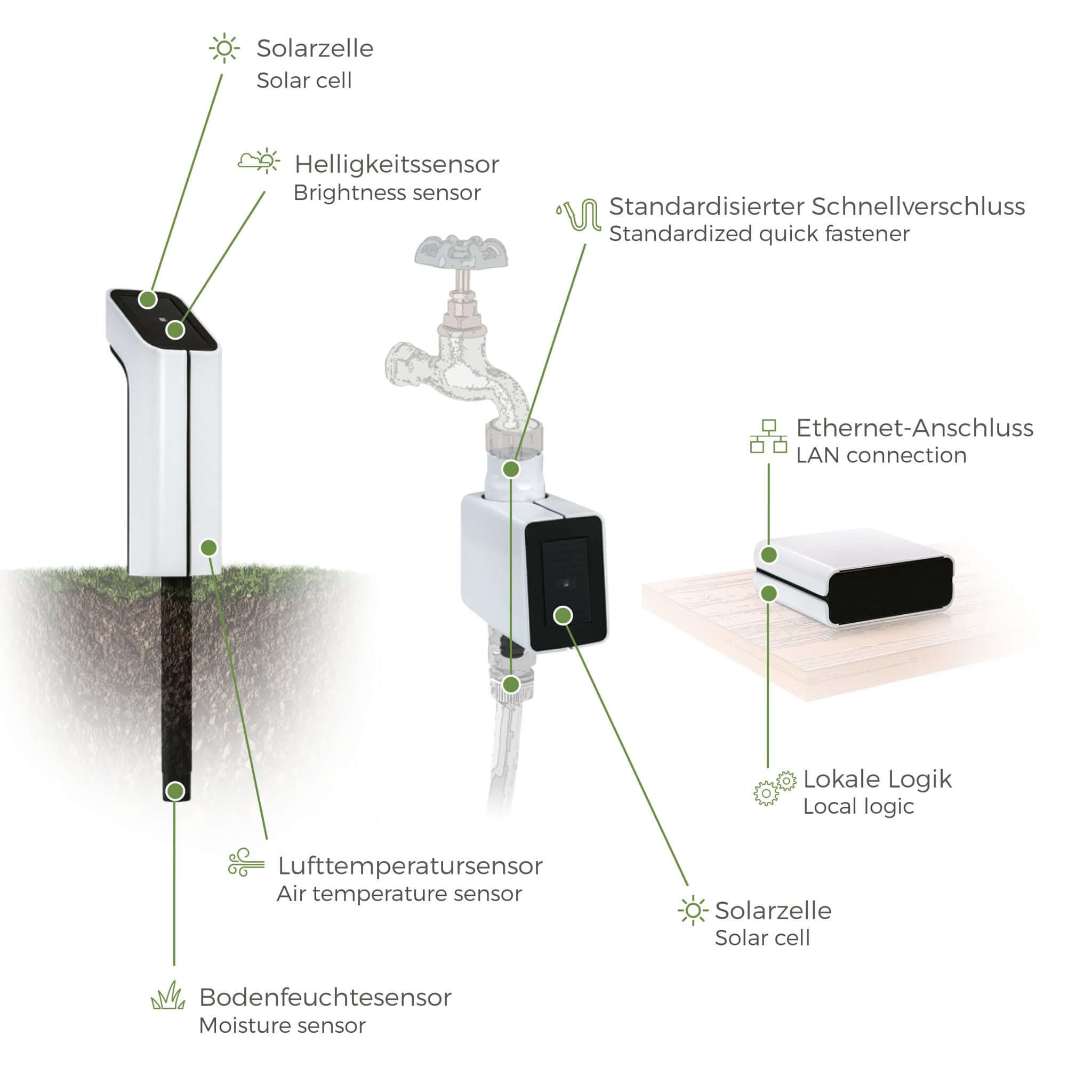
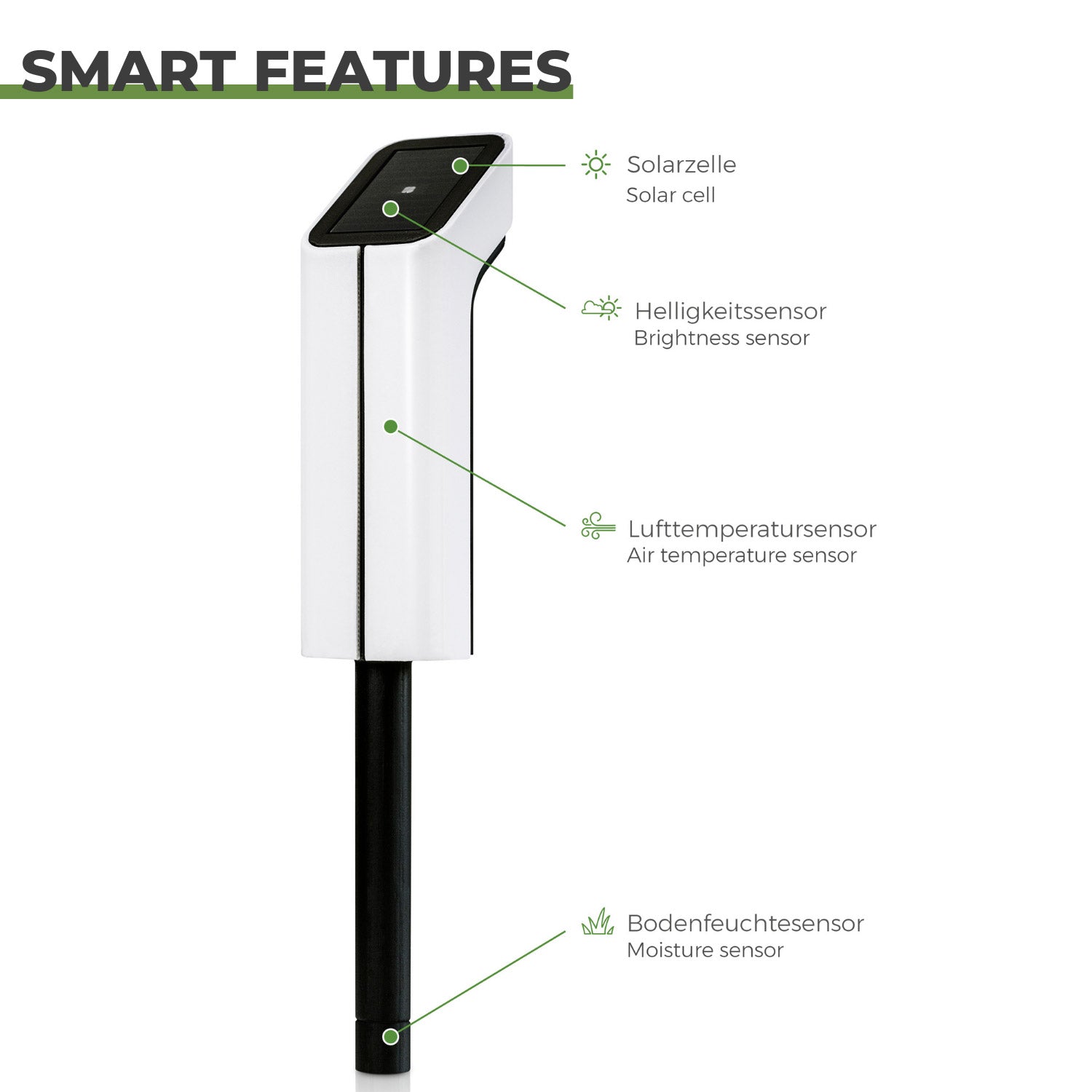
MIYO calculates the evapotranspiration for each of your irrigation zones based on the weather data of the location, the entered soil type and garden parameters, as well as the sunlight intensity, temperature, and soil moisture measured by the MIYO soil moisture sensor. The Penman-Monteith model was adapted to MIYO's requirements for the calculation.
What are typical evapotranspiration values
Evapotranspiration per day in Central Europe in spring and autumn ranges between 0.5mm and 3mm and rises in summer to 2mm to 7mm. 1mm corresponds to one liter of water per m². This water loss must be compensated by rainfall or irrigation to ensure the plants are sufficiently supplied.
How much evapotranspiration fluctuates from day to day is shown by the calculations of two days in the same week in June 2025 in Vienna. On a hot, cloudless summer day with temperatures above 30° C, a calculated water demand of 6l/m² results. On a cooler cloudy day, the garden only needs 2l/m².
Fair Weather Day
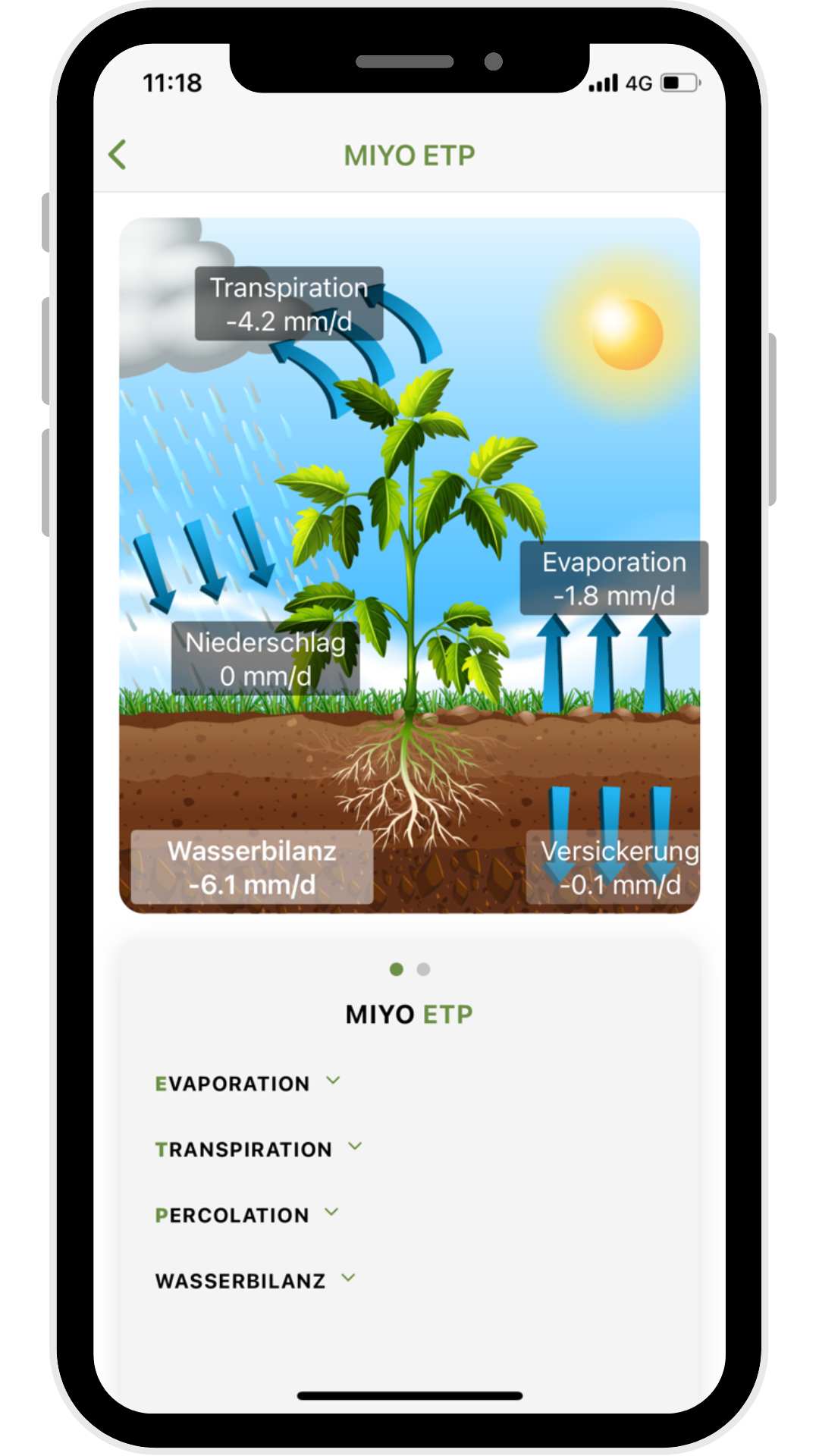
Cool day with dense clouds
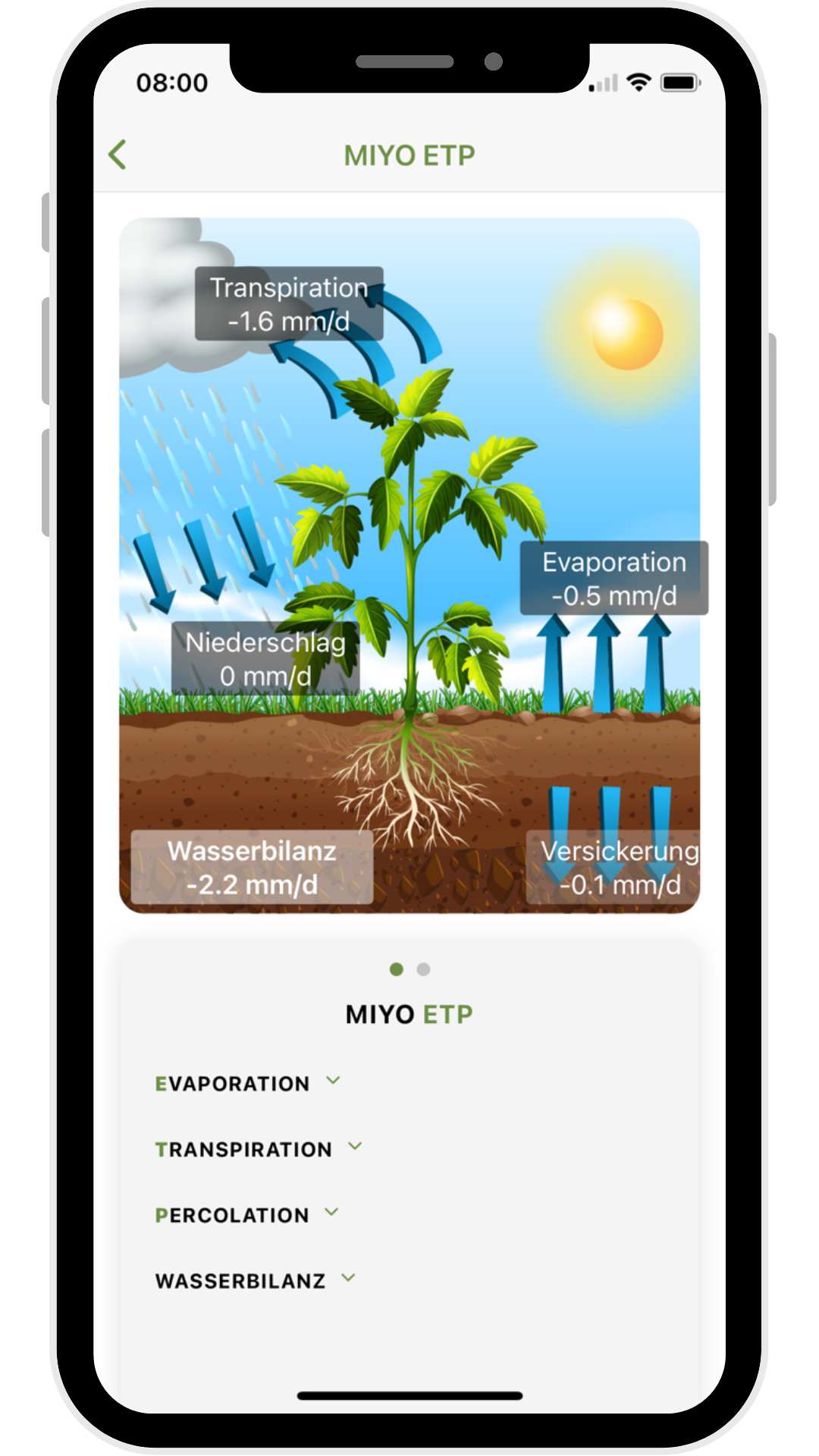
Fair Weather Day
Cool day with dense clouds
Factors influencing evapotranspiration
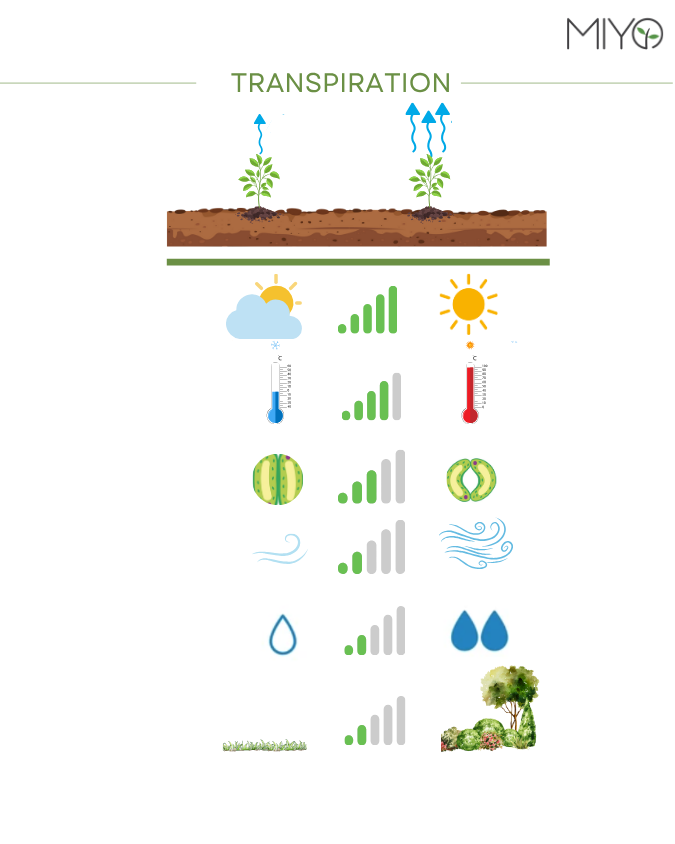
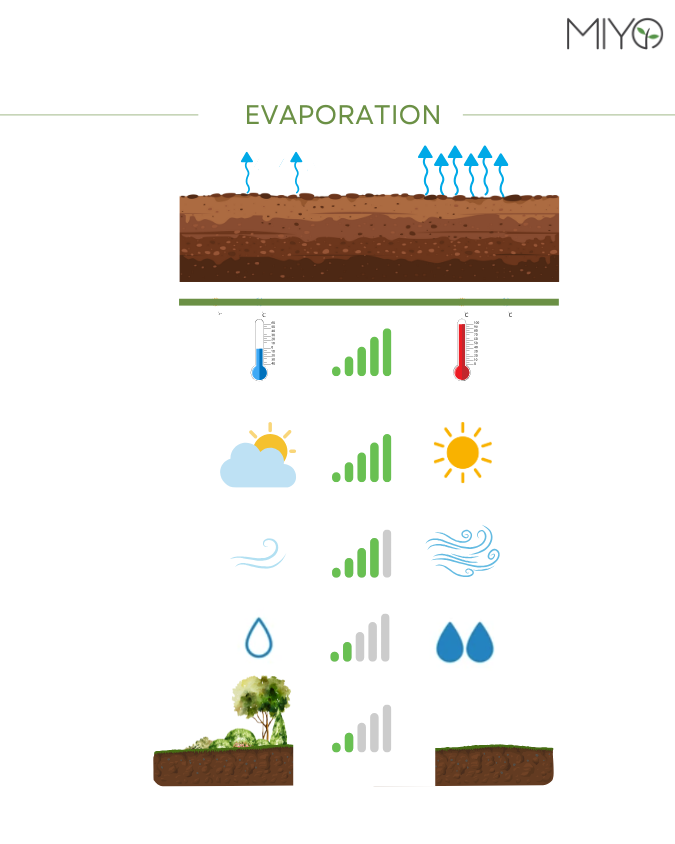
- Climate: High temperatures, direct sunlight, dry air, and wind accelerate water evaporation.
- Ground cover: Dense vegetation reduces direct soil evaporation but increases transpiration.
- Soil: Sandy soils dry out faster, while clay soils retain water longer.
🌿 Why is transpiration greater than evaporation
In well-vegetated, agriculturally used, or greened areas – typical gardens, meadows, or fields – transpiration is higher than evaporation.
- Plants have a significantly larger "active evaporation surface" (leaves, needles), often many times larger than the soil surface.
- Plants "control" transpiration through stomata (pores) and respond to light, temperature, and humidity.
- Where plants cast shade, the soil remains cooler and moister → this reduces evaporation.
- In late spring and summer, transpiration is often responsible for 70–90% of total evapotranspiration – especially with dense vegetation like potatoes, corn, sunflowers, or a meadow.
A large beech tree with 600,000 leaves can transpire over 300 liters of water on a hot day – equivalent to 2 bathtub fillings per day, released into the atmosphere through the leaves.
MIYO and evapotranspiration
MIYO calculates the evapotranspiration of the past 24 hours for each of your irrigation zones based on measured and transmitted data. You have two options to use this.
- Manually monitor evapotranspiration: you can manually adjust your irrigation according to the evapotranspiration values to the seasonal weather conditions. The fine control, such as skipping irrigation cycles in case of rain forecast, is done independently by MIYO.
- Automatic adjustment to evapotranspiration: you can also leave the adjustment to evapotranspiration to MIYO. Activate it in the irrigation settings. You can also specify from which values a reduction should occur and whether a minimum irrigation should take place in any case.
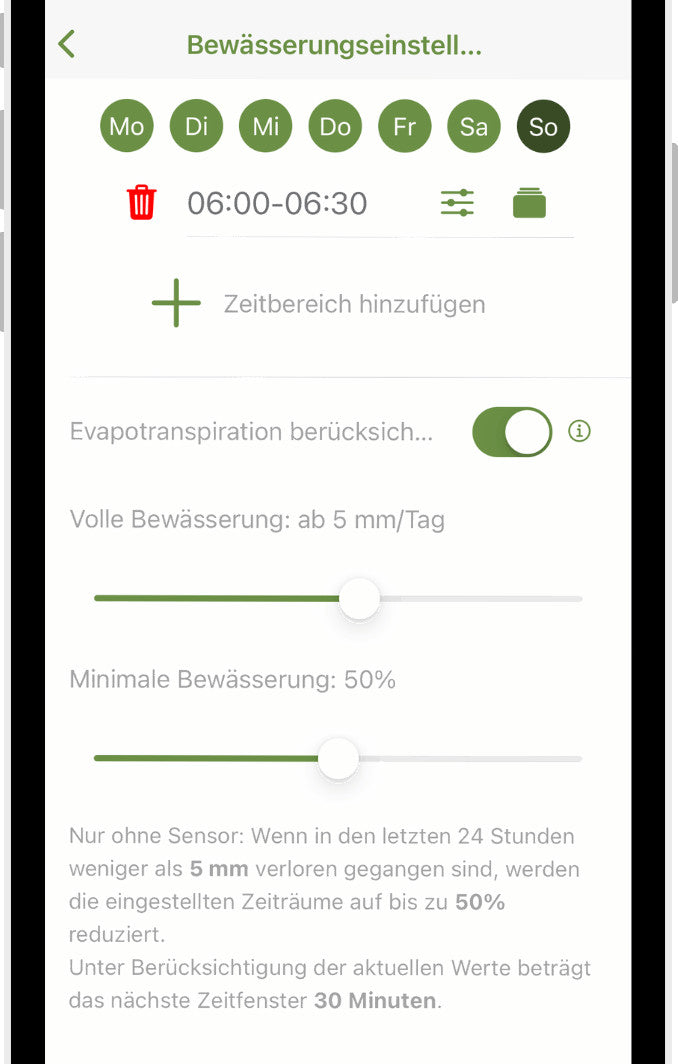
This is how you ensure with MIYO that your garden is always optimally supplied with water. MIYO takes care of adjusting to temperature, sunlight, rainfall, and other factors for you. You can make detailed adjustments at any time via the settings.
Our customers say it better than we do!
Based on 29 reviews
You might also like this