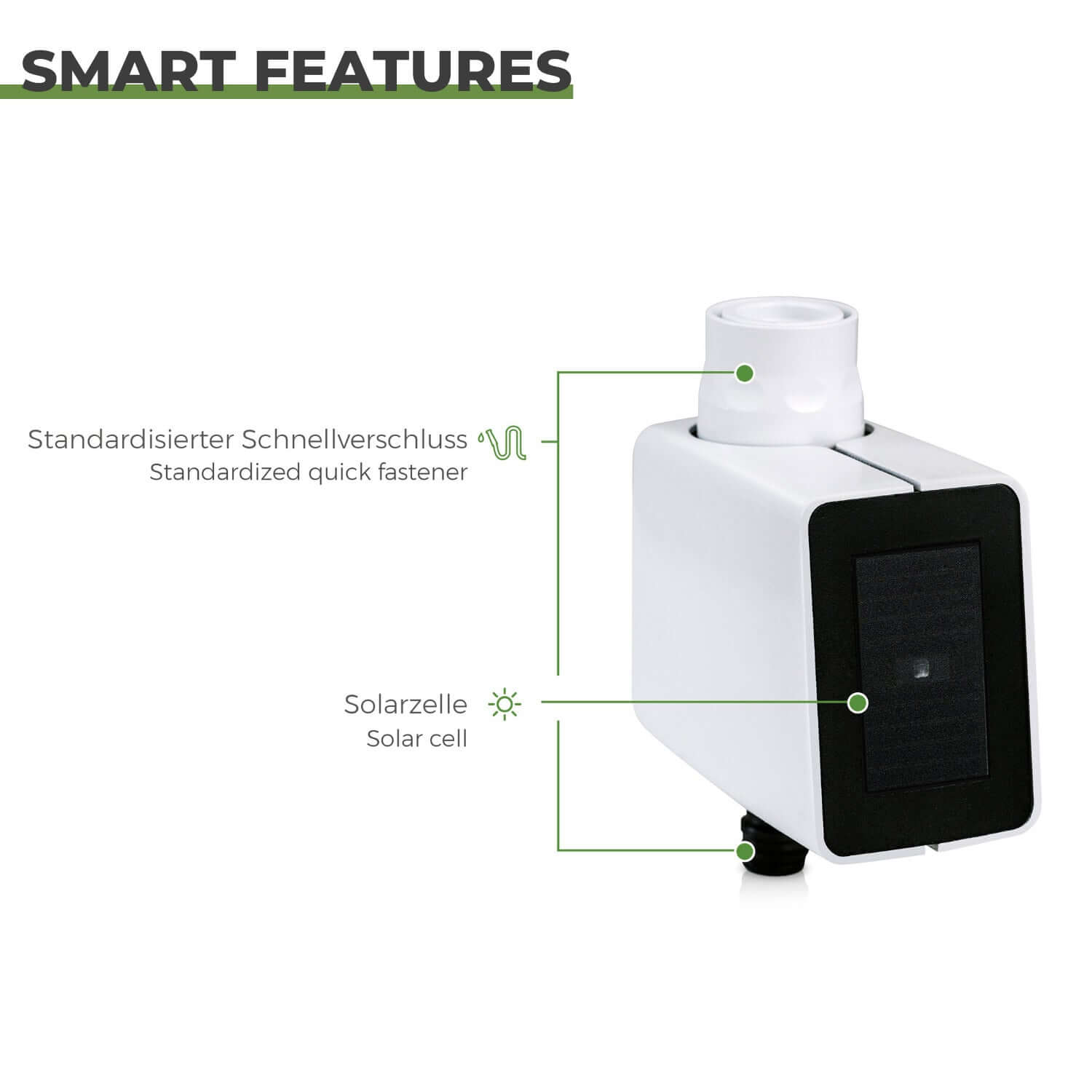
Perfect irrigation for your garden
How do plants absorb water?
Every plant is unique and has its individual water needs. These change with the weather, season, soil type, and location. Plants absorb water and nutrients through their roots, especially in the zone where most fine roots are located. In the garden, these fine roots are usually found at a soil depth of 10–60 cm (depending on the plant). Of course, there are plants that root many meters deep, but this is usually not relevant for gardens.
Why is the root zone important for irrigation?
- Water absorption: Plants absorb water through their fine roots
- Nutrient availability: Nutrients in the soil are only absorbed in dissolved form. Therefore, the root zone must be sufficiently moist so that nutrients can dissolve and be reached by the roots.
- Soil properties: The storage capacity, drainage, and air circulation in the root zone determine how much water is available to the plants before the soil becomes dry or waterlogging occurs.
- Plant growth: Dryness or waterlogging in the root zone can inhibit root growth and make the plant susceptible to stress. Balanced moisture is therefore essential.
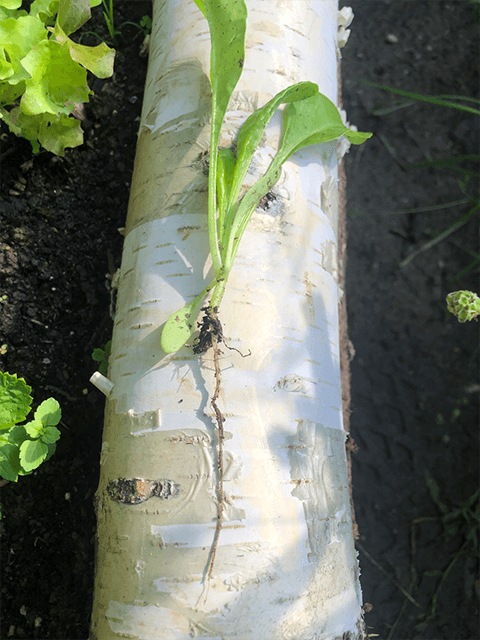
At the root of a young Swiss chard plant, you can clearly see how quickly roots grow:
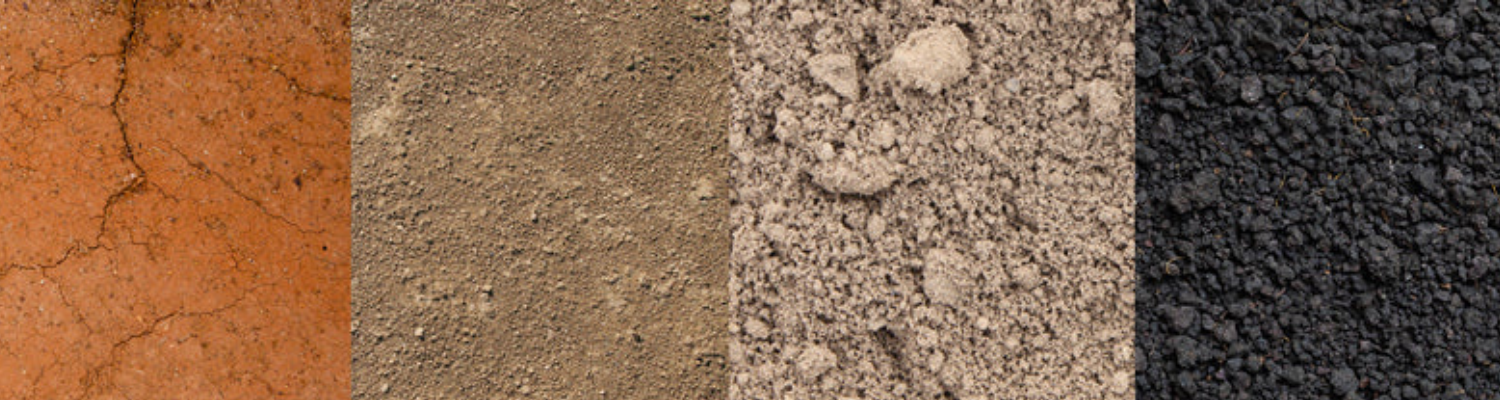
The soil types
Soil consists predominantly (>90%) of mineral components of different grain sizes and a proportion of organic substances (<10%).
Mineral components and their grain sizes
The mineral components of the soil are divided according to their grain size:
Sand: Grain size: 0.063–2 mm
Silt: Grain size: 0.002–0.063 mm
Clay: Grain size: < 0.002 mm
In practice, almost only mixed forms occur, which are called loam. The classification is done using the soil triangle, which shows the mixing ratios. For example:
Sandy loam: 60 % sand, 30 % silt, 10 % clay
Clay loam: 35 % clay, 40 % silt, 25 % sand
Clay
Due to the small grain size, alumina binds water very strongly. Highest water retention capacity, but not fully available to plants due to the strong binding. Low infiltration, risk of soil compaction and waterlogging.
For agricultural purposes, clayey soils are difficult to work with but very fertile if well aerated. Clayey soils are widespread in Europe.
Silt (or silt)
Loam soils have good water retention, which is advantageous for plants with higher moisture needs. Rich in minerals and provides a good nutrient base. Prone to siltation, crusting, and compaction.
Suitable for vegetables such as potatoes, cabbage, spinach, and beetroot, flowering plants such as asters, phlox, and bellflowers, and fruit such as apple and cherry trees that prefer consistent moisture
Sand
In sandy soils, water drains quickly, they have a low water retention capacity, and nutrients are easily washed out. They require more frequent irrigation, but in smaller amounts.
Sandy soils are good for plants that prefer dry conditions and are sensitive to waterlogging due to their good drainage, loose structure, and rapid warming. These include, for example, herbs and Mediterranean plants such as lavender and rosemary, coneflower, carrot, radish.
loam
Good balance between water retention capacity and drainage. Loamy soils retain enough water for plants but do not tend to waterlogging like clay soils. Due to their high nutrient retention and loose structure, loamy soils are suitable for almost all types of plants. Loamy soils are optimal for cereal cultivation (wheat, barley), vegetables (potatoes, onions), and orchards.
What are the characteristics of the soil types
1. Sandy Soils
Organic Material Content: 1–2 %
Description: Sandy soils have a low capacity to store organic material because they have a small surface area and poor nutrient retention. Organic substances decompose and leach out more quickly.
Water Retention:
Low fertility
Low water retention capacity, rapid water loss
Improvement needed by adding humus or compost
Plants often have access to water only for a short time
Suitable Irrigation: Frequent but small water applications to maintain surface moisture.
2. Silty Soils
Organic Material Content: 2–4 %
Description: Silty soils have a medium structure that allows moderate storage of organic material. They promote even decomposition of organic matter.
Characteristics:
Good water retention capacity
Medium fertility
Susceptible to erosion by wind and water, so mulch or organic cover layers are recommended
Suitable Irrigation: Even irrigation with moderate amounts
3. Loamy Soils
Organic Material Content: 3–6 %
Description: Loamy soils offer the best mix of water retention, nutrient availability, and decomposition rate. They promote the buildup and storage of humus.
Characteristics:
Suitable Irrigation: Medium-sized water applications at longer intervals. Flexible, generally tolerates both longer dry periods and a lot of water well.
4. Clay Soils
Organic Material Content: 2–5 %
Description: Clay soils store organic substances well due to their fine particles, but slow air exchange can inhibit decomposition, especially in waterlogged conditions.
Characteristics:
Suitable Irrigation: Longer, slow irrigation with small amounts of water to achieve even moistening.
5. Peat Soils (Special Case)
Organic Material Content: 30–90 %
Description: Peat soils consist mainly of organic material because decomposition is greatly slowed under water-saturated conditions.
Characteristics:
Very high water retention capacity
Low in nutrients because organic substances hardly decompose
Extremely low in oxygen, therefore mostly unsuitable for agriculture
Valuable CO2 storage
Field capacity and wilting point: The water storage capacity of the soil
Two central terms in the soil water balance are field capacity and the wilting point.
- Field capacity
Field capacity describes the maximum amount of water the soil can store after rain without excess water draining away. - Wilting point
The wilting point is the state when the soil contains so little water that plants can no longer absorb water and begin to wilt.
The range between field capacity and wilting point is available as water for plants and is called plant-available water.
Relationship between soil type and field capacity
The following overview table shows the field capacity, the wilting point, and the plant-available water (PAW) for different soil types. The values are averages as they depend on factors such as organic content, soil structure, and compaction:
Water balance and soil types
| Soil type | Field capacity (% volume) | Wilting point (% volume) | Plant-available water (PAW) (% volume) | Notes |
|---|---|---|---|---|
| Sandy soil | 5-15 | 1-5 | 4-10 | Very low water retention capacity, water drains quickly. Frequent watering necessary. |
| muddy ground | 20-35 | 7-15 | 13-20 | Good water retention capacity, but sensitive to erosion. |
| Clayey sandy soil | 15-25 | 5-10 | 10-15 | Improved water retention compared to pure sand. |
| Clay soil | 30-45 | 10-20 | 20-25 | Optimal soil for farming, balanced storage and drainage properties. |
| Clayey loam | 35-50 | 15-25 | 20-25 | High water retention, but potentially slow drainage. |
| Clay soil | 40-60 | 20-30 | 15-30 | High water storage capacity, but less water available for plants because it is strongly bound. |
| Peat soil | 70-90 | 30-50 | 40-60 | Extremely high water retention due to organic substances, nutrient deficiency often a problem. |
Organic substances (humus)
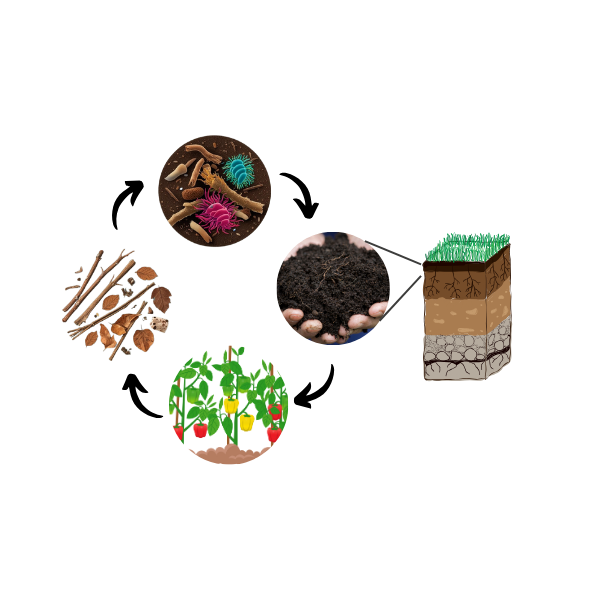
Organic substances, such as dead plant material, roots, and microorganisms, are called humus. Humus is constantly decomposed by microorganisms in the soil and thus converted into plant nutrients.
- Humus improves water retention, soil structure, and nutrient availability.
- Organic substances contribute to the formation of macro- and micropores, which are important for water and air circulation.
- Soils with high humus content can store more plant-available water.
Tips for sustainable irrigation
- Consider soil type: Sandy soils often require more frequent but smaller amounts of water, while clay soils tolerate larger, less frequent water applications. With MIYO, all irrigation parameters can be set based on specifications and individually adjusted to the garden's needs if necessary.
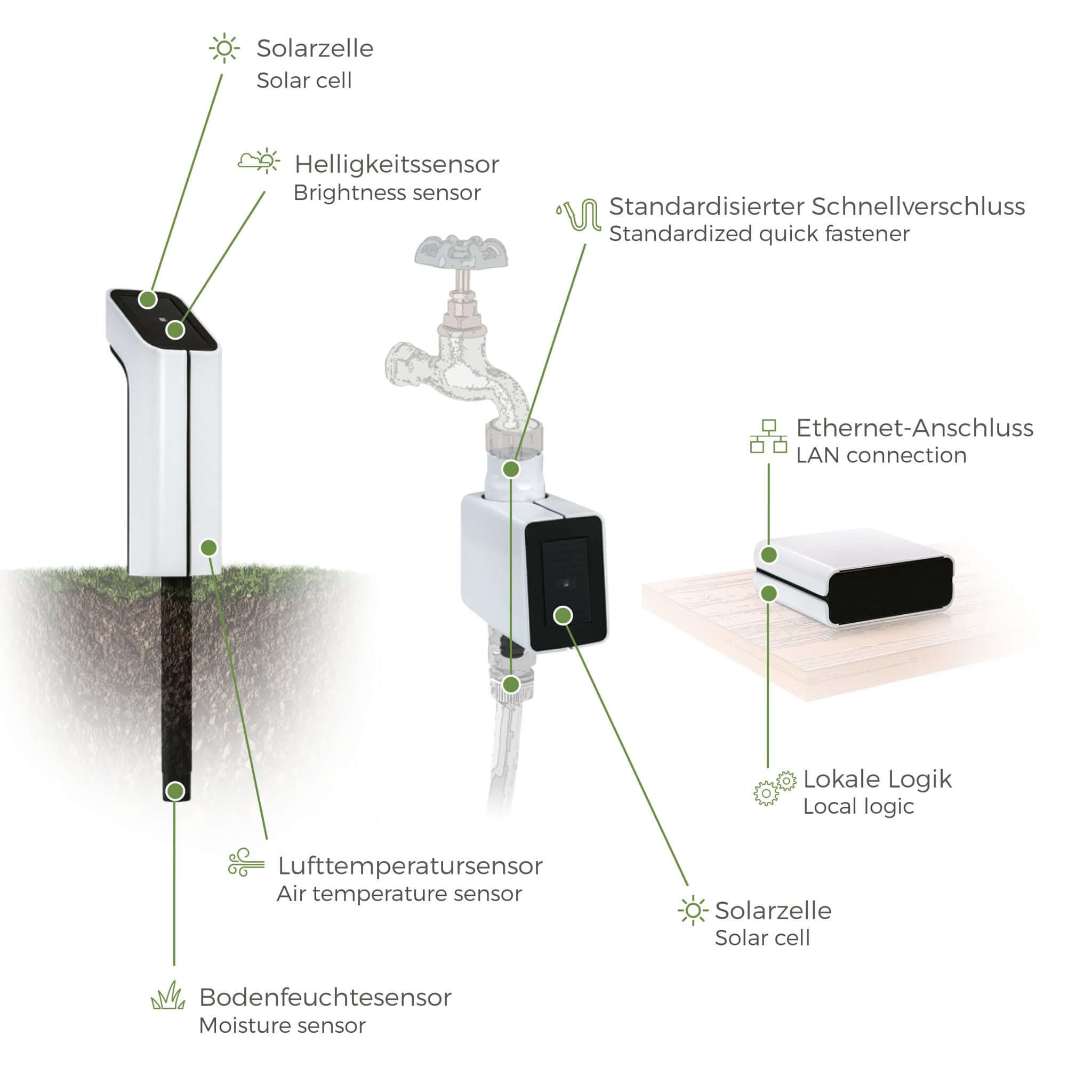
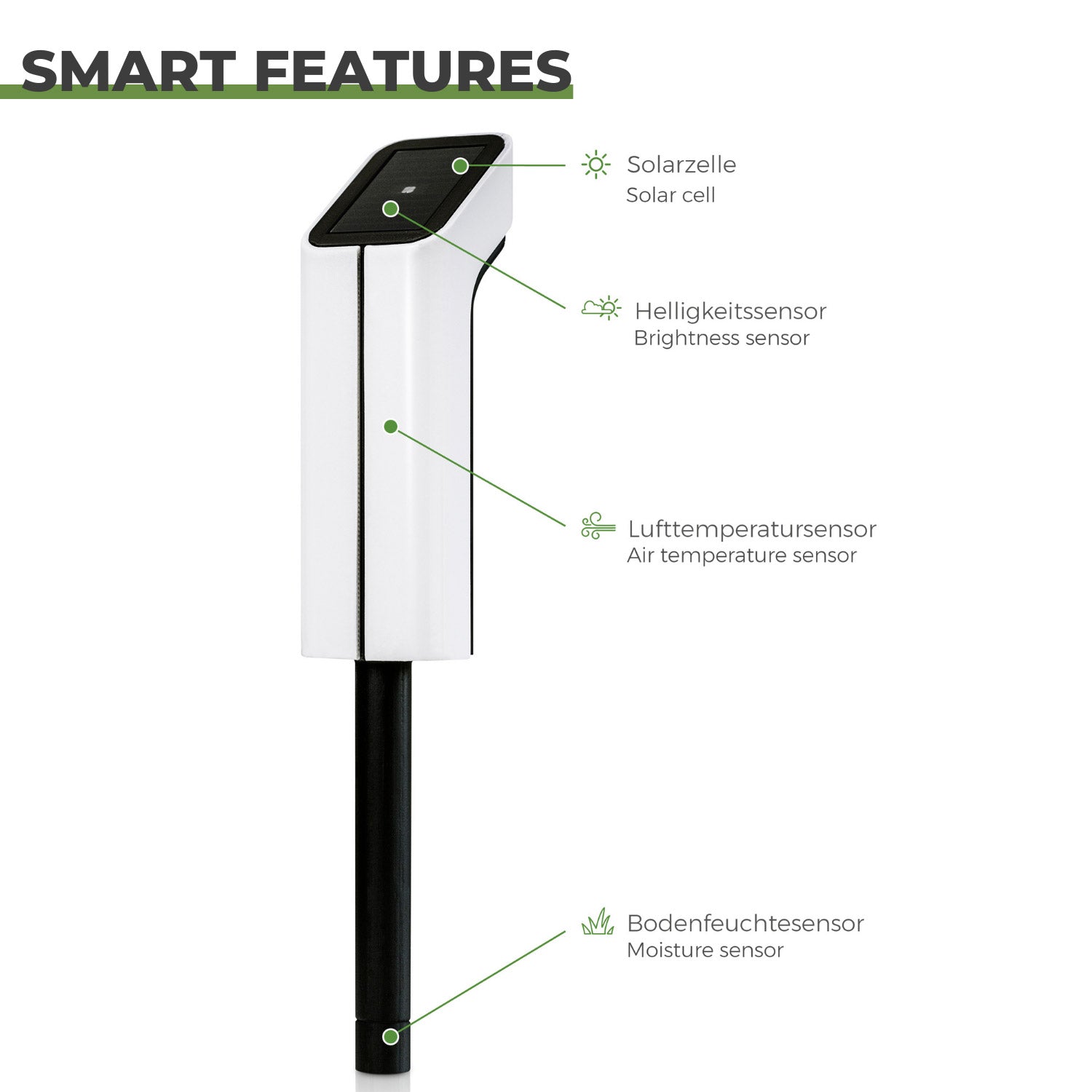
- Monitor evapotranspiration: MIYO calculates the evapotranspiration precisely for each irrigation zone based on measured and transmitted data. This way, the irrigation exactly compensates for water losses through evaporation and transpiration. You can find more information here.
- Optimize irrigation timing: Watering early in the morning before it gets hot reduces water loss through evaporation. The afternoon is also an option. Avoid watering in the evening or at night, as prolonged moisture on leaves can promote the growth of fungal diseases. In the MIYO app, you can adjust the times for each day with just a few clicks.
- Drip irrigation: This method delivers water directly to the plant roots and minimizes losses through evaporation.
- Mulching: reduces evaporation and ensures that water stays longer in the root zone.
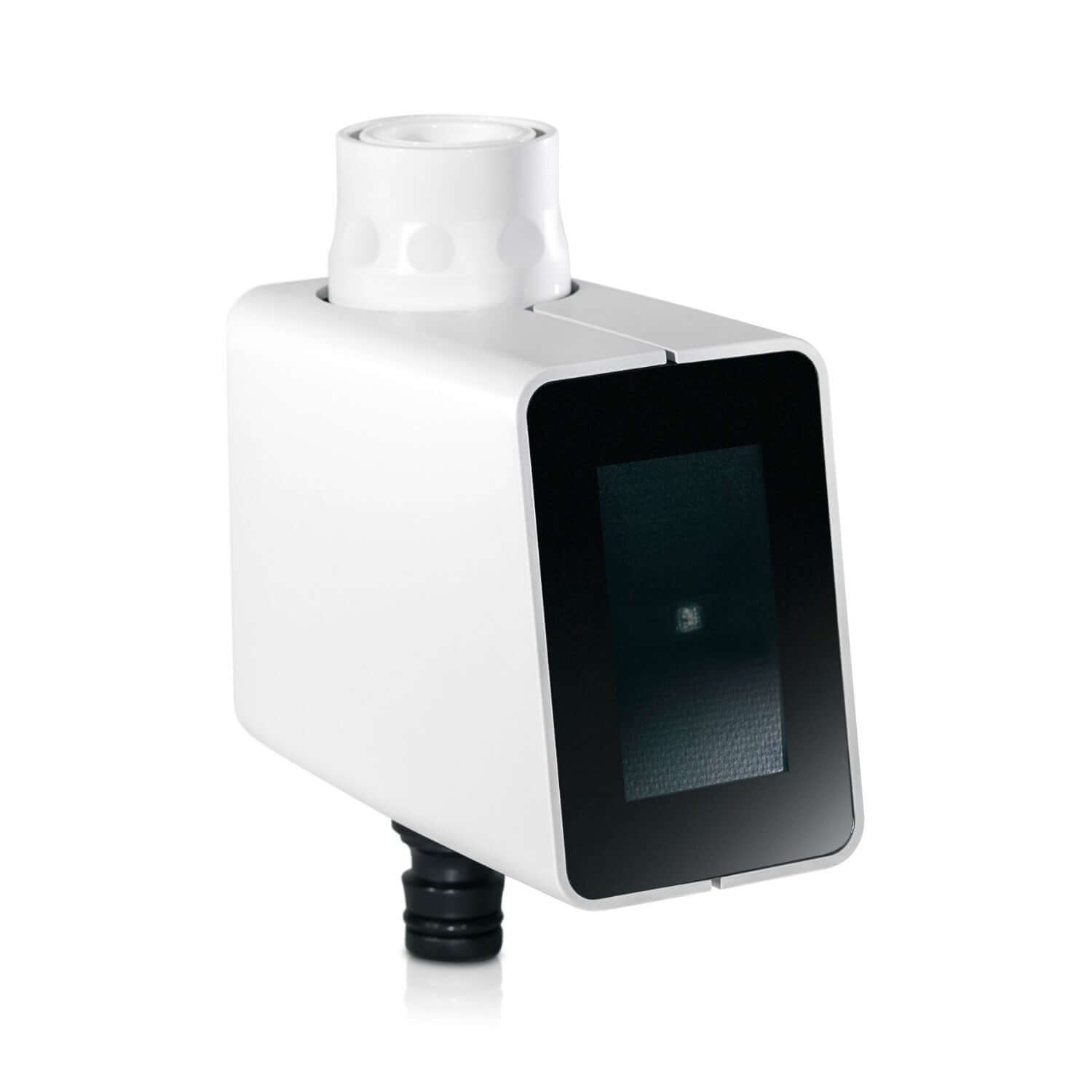
- Avoid overwatering: Waterlogging causes severe and long-term damage to plants and soil and should therefore be avoided at all costs. The easiest way to do this is with a smart MIYO irrigation system. Irrigation controllers with fixed intervals should definitely be avoided, as they inevitably lead to constant over- or underwatering.
- Adjust irrigation intervals to the plant: Shallow-rooted crops benefit from more frequent watering. Deep-rooted plants need water less often but in larger amounts to moisten the deeper layers. These parameters can be easily adjusted to the plant's needs in the MIYO app.
- Measure soil moisture: Soil sensors or simple digging tests can help monitor moisture in the root zone and avoid overwatering or drought stress.
- Increase water holding capacity: Organic matter (e.g., humus) in the root zone improves water retention and increases the amount of plant-available water.
This is how you control your intelligent MIYO irrigation system
The water needs of your plants depend on their type, location, and weather and soil conditions. All these factors are taken into account by MIYO when irrigating your garden.
Here's how to proceed
- Divide your garden into irrigation zones. Areas with similar water needs can usually be grouped into one zone. Later changes and reassignments of Sensors and valves are easy to perform with MIYO.
- To save water, it is best to plant plants with similar water needs in one area. The Sensor should be placed at a representative spot in this area. Targeted water supply, e.g., drip irrigation, is more economical than irrigating large areas, e.g., with sprinklers. Irrigation should be designed so that the area is evenly supplied.
- MIYO can irrigate either purely time-controlled or with soil moisture measurement. Even when irrigating with soil moisture measurement by the Sensor, you can enter time windows during which irrigation can take place. In the irrigation settings, you can set the lower and upper moisture limits. To achieve natural fluctuations and save water, make sure to set the moisture limits far enough apart. Usually, irrigation is not needed every day.
- Consideration of rain and rain forecasts can be optionally set for both time-controlled and sensor-controlled zones.
- You make adjustments to irrigation based on the water consumption of the plants in the irrigation settings of the zone in the MIYO app. There are no universal guidelines; the values must be determined individually for plants and garden. Besides the type of plants, location, sun orientation, wind exposure, type of planting, and soil condition of the garden should also be considered. The more drought-resistant a plant is, the lower the lower limit of soil moisture measured by the MIYO Sensor can be set. Thanks to the numerous adjustment options, the intelligent MIYO irrigation can be adapted equally well for flowers and vegetables as for lawns and trees.
- Use mulch: If you apply a layer of mulch around your plants, it helps retain soil moisture by reducing evaporation. Mulch also helps suppress weed growth, regulate soil temperature, and improve soil structure in the long term.
MIYO is the best guarantee for optimal water supply to your garden and for avoiding overwatering. Adjustments to the growth phases of the plants or observations of plant health are easily done on your phone.
FAQ
Questions about the soil water balance
What is meant by the water balance of the soil?
It describes the storage, movement, and availability of water in the soil for plants.
What is the difference between field capacity and wilting point?
Field capacity describes the maximum amount of water the soil can store, while the wilting point defines the condition where plants can no longer absorb water because it is bound so tightly to the soil particles that the plant can no longer generate the suction pressure. Especially clay soils can still contain considerable amounts of water, but plants are already thirsty.
Irrigation should take place before reaching the wilting point, as otherwise initial plant damage may occur.
What does plant-available water (pfW) mean?
This is the amount of water between field capacity and permanent wilting point. Only this range is available for plant use. Depending on the soil, a saturated soil in the top 10 cm contains about 1 cm (sandy soils) to 3 cm (loamy soils) of water that is available to plants.
Which soil types store water best?
Clay soils store up to 45% of their volume in water. Loam soils store less water but release it more easily. They have the best combination of water absorption and storage.
How can I calculate the water requirements of my plants?
The water demand depends on evapotranspiration, soil type, and plant species. Ultimately, the daily evapotranspiration must be supplemented. For drought-resistant plants, it is possible to wait longer before filling the water reservoirs. In the MIYO app, you always see the current evapotranspiration of your garden.
How can I tell if the soil is too dry or too wet?
Too dry: The plants begin to wilt, and the soil feels crumbly and hard and shows cracks.
Too wet: Water collects on the surface, or the soil feels muddy (especially in clay soils). The MIYO soil moisture sensor is a precise method to monitor moisture and determine irrigation needs.
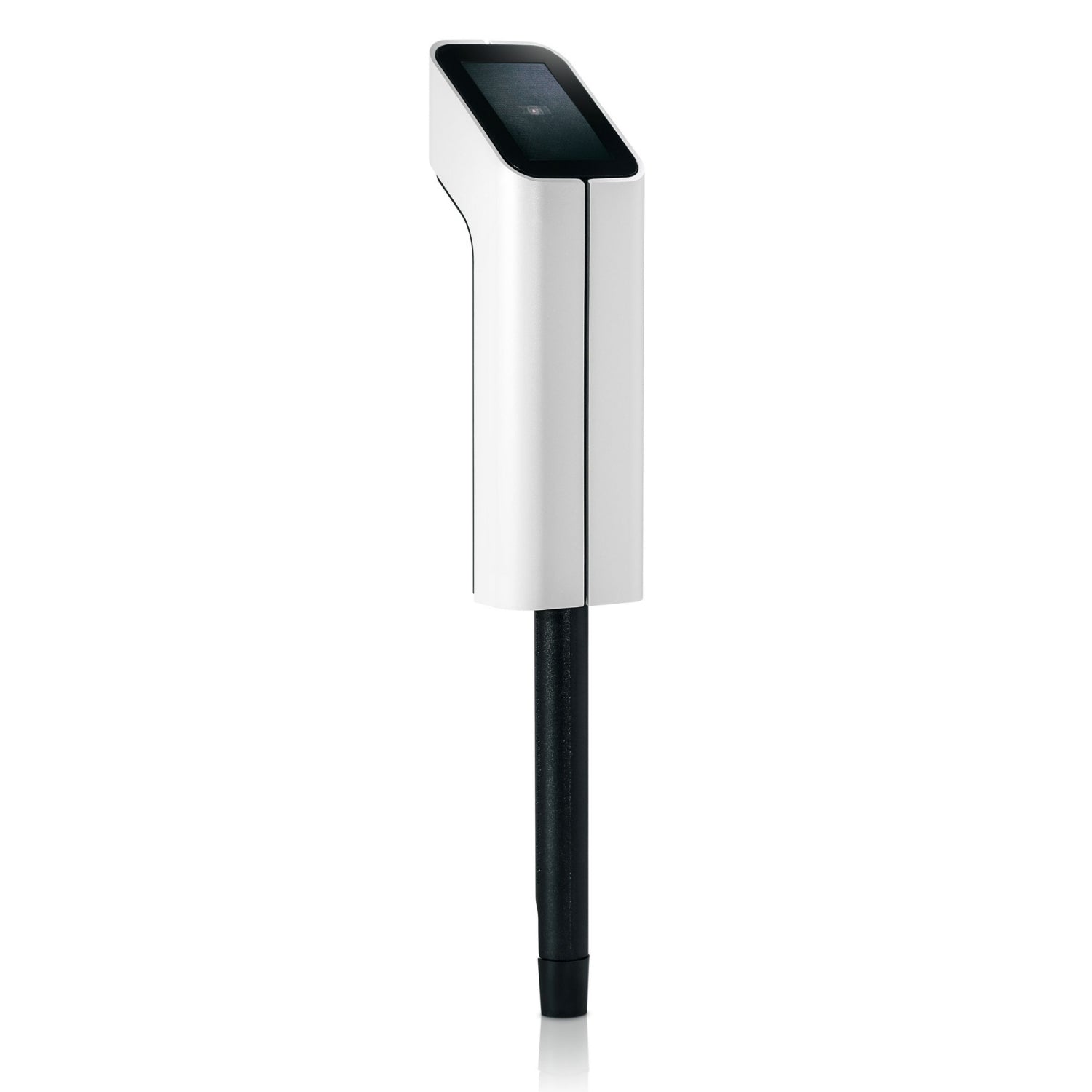
The key to a healthy garden is the right soil moisture. Not too dry, but not too wet for extended periods. You should definitely avoid overwatering, as this leads to soil compaction and valuable nutrients being washed out. Timed irrigation must therefore be continuously adjusted to seasonal and weather conditions. Therefore, we definitely recommend using the MIYO moisture sensor in sensitive garden areas.
How can I improve the water balance in the garden?
Through mulching, humus buildup, ground cover, proper plant selection, and gentle watering without overwatering.
Can you determine the field capacity and wilting point with MIYO?
If the soil is thoroughly moistened after heavy rain or irrigation (e.g., 30–40 mm precipitation/irrigation), wait 1-2 days until no surface water is visible and the soil no longer shines. Additionally, you can take a soil sample. It should feel moist but not drip. This value roughly corresponds to field capacity.
At the wilting point, the water loss begins to slow down and the soil moisture curve becomes flatter.
Switch now and let your smart MIYO irrigation system do the work for you.
Our customers say it better than we do!
Based on 29 reviews
You might also like this